7 Best Ways to Prepare Food Faster With the Right Equipment?

Time:2026-09-22 Author:Madeline
0%

Preparing a fresh meal should not feel like a race against the clock. Yet chopping onions, boiling water, and cleaning crowded counters can consume most of an evening. The right equipment can reduce those delays without turning your kitchen into a professional restaurant.

This guide explores how to prepare food faster with the right equipment, using practical tools and realistic cooking habits. A sharp chef’s knife can make vegetable prep smoother and safer. A food processor can handle repetitive chopping in seconds. A pressure cooker, induction burner, or compact countertop oven can shorten cooking times when used correctly. Even a sturdy cutting board with a non-slip base can prevent interruptions.

The best results come from matching each tool to a specific task. Keep frequently used equipment within reach, and prepare ingredients before heating the pan. Clean blades immediately, because neglected tools slow the next meal. Food safety still matters; separate raw meat from produce and follow the manufacturer’s instructions.

More gadgets do not always mean faster cooking. I once bought a large appliance that occupied half the counter and rarely earned its space. That mistake changed my approach. Useful equipment should save time, simplify movement, and remain easy to clean. These seven methods focus on efficient choices, careful technique, and small improvements that work in an ordinary kitchen.
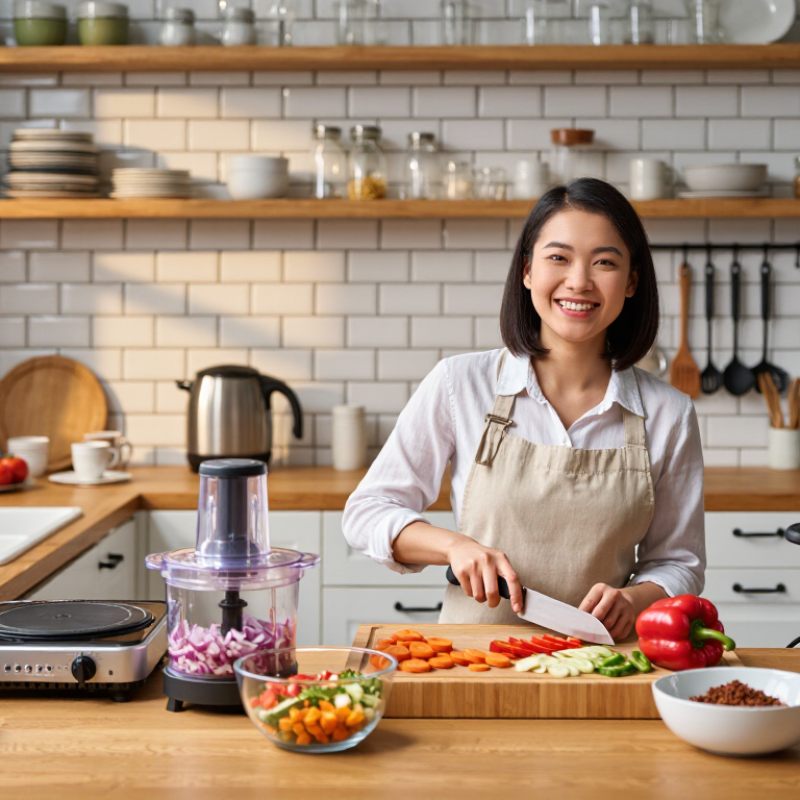
7 Best Ways to Prepare Food Faster With the Right Equipment?

Choose Equipment That Matches Your Cooking Tasks

Preparing food faster starts with matching equipment to the task, not collecting every tool in the drawer. I have found that a wide cutting board speeds vegetable prep because ingredients stay organized. A sharp chef’s knife handles onions, herbs, and firm vegetables with fewer repeated cuts. For small quantities, a compact processor may save time, but washing it can erase the advantage. Capacity matters too. A small pan overcrowds food and slows browning.

Choose equipment by the movement it must perform. A high-sided pot suits soups and sauces, while a shallow skillet helps moisture escape quickly. An adjustable heat source gives better control than equipment with one fixed setting. For baking, use measured mixing tools and a reliable oven thermometer, since displayed temperatures can be inaccurate. I once bought a large appliance for occasional prep; storing and cleaning it became a daily nuisance. That choice looked efficient, but it was not. I still sometimes select tools based on speed alone, which needs more thought.

Tips: Keep frequently used tools near the work surface. Match container size to the batch. Test one new tool during a normal meal, not a rushed dinner. Check grip, cleaning steps, and replacement parts before buying. Leave space around hot equipment. Small improvements count.

Organize Ingredients and Tools Before Preparation

A fast meal usually begins before the stove is turned on. I learned this after repeatedly searching for a peeler with wet hands. Now, I clear the counter and place a cutting board near the sink. Knives, measuring spoons, bowls, and storage containers stay within reach. This simple arrangement reduces unnecessary movement and keeps preparation safer.

I read the recipe completely and group ingredients by task. Vegetables go beside the board, while spices sit in a small dish near the cooking area. I wash and dry produce before cutting it. Ingredients with longer cooking times receive attention first. A sharp knife also matters; it cuts more cleanly and requires less force. My setup is not perfect. I sometimes forget to prepare a small ingredient, which slows everything down.

Tips: Use one tray for prepared ingredients and another for unused tools. Label containers when several sauces or portions look similar. Keep a damp cloth nearby for quick spills. Check that your timer, oven mitts, and waste bowl are ready before preparation starts. Avoid filling the counter with equipment you may not use. A crowded workspace creates hesitation. When possible, measure dry ingredients together and place them in separate containers. This makes the cooking sequence easier to follow, even when the kitchen becomes busy.

Use Multi-Function Appliances to Combine Cooking Steps

7 Best Ways to Prepare Food Faster With the Right Equipment?

A multi-function appliance can remove several pauses from dinner preparation. I use a multicooker to sauté onions, brown meat, and simmer sauce in one pot. The same bowl keeps ingredients warm while I prepare vegetables. This reduces transfers, washing, and waiting time. It also keeps cooking temperatures more consistent than switching between separate pans.

A food processor can chop onions, grate carrots, and blend a dressing within minutes. Choose a model with a wide bowl and easy-to-clean parts. Uniform pieces cook more evenly, which improves both speed and texture. A countertop oven with multiple settings can roast vegetables while another appliance cooks grains. Keep the work area clear, though. Crowded counters create small delays and increase handling mistakes.

I once filled a cooking bowl too heavily and slowed the process. More food is not always faster. Follow the appliance’s capacity marks, especially when using pressure or steam functions. Read the instruction manual before combining settings. Allow space for heat and steam to escape safely. I still prepare ingredients in separate containers when timing matters. It feels slower at first. Yet measured portions help me load each function quickly and avoid searching for ingredients mid-cooking.

7 Best Ways to Prepare Food Faster With the Right Equipment? - Use Multi-Function Appliances to Combine Cooking Steps
No. Faster-Cooking Method Recommended Equipment Cooking Steps Combined Typical Food Applications Conventional Time Optimized Time Typical Time Saved
1 Pressure-cook complete meals Electric pressure cooker with sauté and slow-cook functions Sauté aromatics, brown ingredients, pressure-cook, and hold warm in one pot. Beans, lentil stew, chicken soup, beef stew, and risotto-style rice dishes 60–120 min 30–60 min 20–60 min
2 Steam and cook simultaneously Multi-tier electric steamer or pressure cooker with a steaming rack Cook a main ingredient while steaming vegetables or grains above it. Fish with vegetables, chicken with broccoli, dumplings, potatoes, and rice 35–50 min 20–35 min 10–20 min
3 Blend, heat, and serve from one appliance Heating blender or high-speed blender with a soup program Chop, blend, simmer, and purée without transferring ingredients between containers. Tomato soup, pumpkin soup, vegetable soup, sauces, and smoothies 35–45 min 20–30 min 10–20 min
4 Air-fry while preparing another component Convection air fryer or countertop convection oven Use rapid circulating heat to roast or crisp food while a separate side dish is prepared. Chicken pieces, fish fillets, potatoes, tofu, and roasted vegetables 35–50 min 20–35 min 10–20 min
5 Chop and process ingredients in batches Food processor with slicing, shredding, and chopping attachments Slice vegetables, shred cheese, chop herbs, and prepare sauces using one bowl and interchangeable blades. Stir-fry vegetables, salad toppings, salsa, coleslaw, and meal-prep ingredients 25–40 min 10–20 min 10–20 min
6 Cook grains and vegetables in one cycle Programmable rice cooker with a steaming basket Cook rice, quinoa, or another grain while steaming vegetables or protein above it. Rice bowls, quinoa meals, steamed vegetables, eggs, and simple grain-based lunches 35–50 min 25–40 min 5–15 min
7 Use a multi-function cooker for one-pot meals Programmable multi-cooker with sauté, steam, slow-cook, and keep-warm settings Sauté, simmer, steam, and keep the finished meal warm without using several pans. Chili, curry, pasta dishes, grain bowls, casseroles, and one-pot vegetables 45–75 min 30–50 min 15–30 min
Planning note: The time ranges are typical home-kitchen estimates for approximately four servings. Actual results depend on ingredient size, starting temperature, appliance capacity, recipe complexity, and required pressure-release or preheating time. Always follow the appliance instructions and use safe internal temperatures for meat, poultry, seafood, and eggs.

Speed Up Cutting, Mixing, Heating, and Batch Preparation

Food preparation equipment should remove repeated hand motions, not create extra cleaning. The National Restaurant Association’s 2024 report projected U.S. restaurant sales above $1 trillion, increasing pressure on small kitchens to work efficiently. A high-capacity processor can cut onions, carrots, and herbs consistently. A calibrated slicer can produce even portions with less strain. Use a planetary mixer for dough, sauces, and larger batches. Keep attachments close to the worktable.

Heating also becomes faster with induction units and compact convection ovens. Induction transfers heat directly to suitable cookware, while convection airflow reduces cold spots. Prepare measured ingredient containers before turning on the equipment. This simple habit prevents searching during production.

Batch cooking needs control, not just speed. The FDA Food Code 2022 requires cooling cooked food from 135°F to 70°F within two hours, then to 41°F within six hours. Shallow pans, rapid chillers, and probe thermometers support that target. Do not trust appearance alone.

USDA Economic Research Service data showed food-away-from-home purchases reached 58.5% of U.S. food expenditures in 2023. That scale makes consistency valuable. I have seen fast cutters slow a kitchen when blades were dull or bowls were overloaded. My first equipment layout was also too crowded. Leave space for loading, unloading, and sanitation. Test each machine with real portions, record cycle times, and adjust batch sizes weekly. Five extra seconds can prevent a full rework. Clean tools between batches, even when the schedule feels unforgiving.

Maintain Equipment for Consistent and Faster Food Preparation

A fast kitchen depends on equipment that performs consistently. Dull blades, clogged filters, and loose belts create small delays that become expensive during busy service. In my experience, a slicer that needs repeated passes often signals poor maintenance, not slow staff.

Create a simple daily inspection routine. Check blade sharpness, cutting guards, seals, drain lines, and temperature displays before preparation begins.

The FDA Food Code 2022 requires cold-held food to stay at 41°F (5°C) or below. A poorly maintained refrigerator can risk both food safety and preparation speed. Record temperatures twice daily. Clean condenser coils regularly, because blocked airflow makes compressors work harder. ENERGY STAR guidance also identifies preventive maintenance as an important method for improving commercial kitchen equipment efficiency.

Keep a maintenance log near each major appliance. Write the date, problem, action, and technician’s recommendation. Train employees to report unusual vibration, heat, noise, or longer operating cycles immediately.

These signs are easy to dismiss. That is a mistake. Replace worn gaskets before doors stop sealing, and calibrate scales when portion accuracy changes.

The U.S. Department of Energy notes that efficient foodservice operation depends on proper cleaning, inspection, and servicing. Still, perfect routines are unrealistic. Staff forget, especially during rush periods. A weekly manager review can catch those gaps before they slow the next service.

FAQS

How should I choose kitchen equipment for faster preparation?

Match each tool to its cooking task. A wide board keeps vegetables organized, while a sharp chef’s knife reduces repeated cuts.

Does equipment capacity affect cooking speed?

Yes. A small pan overcrowds food and slows browning. Match the container size to the batch.

When is a compact food processor useful?

It helps with small quantities and repeated chopping. However, washing it may remove the time saved during preparation.

Which cookware suits soups, sauces, and quick cooking?

Use a high-sided pot for soups and sauces. Choose a shallow skillet when moisture needs to escape quickly.

How can I improve baking accuracy?

Use measured mixing tools and a separate oven thermometer. Displayed temperatures can be inaccurate.

What should I inspect before using major equipment?

Check blades, guards, seals, drain lines, and temperature displays. Look for unusual heat, noise, vibration, or longer operating cycles.

How does equipment maintenance support food safety and speed?

Clean filters and condenser coils regularly. Keep cold-held food at 41°F (5°C) or below, and record temperatures twice daily.

What information belongs in a maintenance log?

Record the date, problem, action taken, and technician’s recommendation. Keep the log near the appliance.

How can staff manage maintenance during busy periods?

Ask employees to report problems immediately. A weekly manager review can catch missed checks before the next service.

What mistake should I avoid when buying new equipment?

Do not choose only for speed. I once bought a large appliance for occasional use, and storage became a daily nuisance.

Conclusion

Learning how to prepare food faster with the right equipment begins with choosing tools that fit your cooking tasks. Select appliances and utensils that support the foods you prepare most often, then organize ingredients, measuring tools, and cookware before starting. A well-arranged workspace reduces interruptions and makes each step more efficient. Multi-function appliances can also combine tasks such as chopping, mixing, steaming, and cooking, helping you save both time and counter space.

To further improve speed, use suitable equipment for cutting, blending, heating, and preparing ingredients in batches. Consistent tools can produce more uniform results while reducing repetitive work. Preparing larger portions of ingredients at once can also simplify future meals. Finally, clean, inspect, and maintain equipment regularly. Sharp blades, clear filters, properly working controls, and well-maintained surfaces help appliances perform reliably and prevent delays during food preparation.

Madeline

Madeline

Madeline is a dedicated marketing professional with a wealth of expertise in our company's core offerings. With a keen understanding of the industry, she brings a unique perspective to her role, consistently delivering high-quality content that highlights the superior aspects of our products. As......