How to Prevent Contamination in Food Processing?

Time:2026-10-02 Author:Henry
0%

Food contamination can begin with a small lapse: a wet floor, an unwashed conveyor, or a mislabeled container. The consequences are rarely small. The World Health Organization estimates that contaminated food causes about 600 million illnesses and 420,000 deaths worldwide each year. Its food safety data shows how vulnerable consumers remain, even when modern processing systems exist.

In the United States, the CDC estimates 48 million foodborne illnesses, 128,000 hospitalizations, and 3,000 deaths annually. These figures make “how to prevent contamination in food processing” more than a compliance topic. It is an operational discipline. Strong programs combine HACCP principles, preventive controls, employee training, supplier verification, and accurate traceability. The FDA’s preventive-controls framework also emphasizes identifying hazards before production, not merely reacting after a failure.

Details matter. A cleanable surface must remain clean after repeated use. A thermometer should be calibrated, not simply displayed. During a product changeover, allergen residues can hide beneath seals, frames, or conveyor joints. Environmental swabs, sanitation records, and temperature logs provide evidence that controls are working. They do not replace judgment.

No facility is perfectly protected. That is the difficult part. Teams can follow procedures and still miss a weak signal. A rushed handwashing step may undo hours of sanitation work. Effective prevention therefore requires continuous review, honest reporting, and corrective action. This guide examines practical controls that help processors reduce microbial, chemical, physical, and allergen hazards from receiving through distribution, while building a culture that treats food safety as everyone’s responsibility.
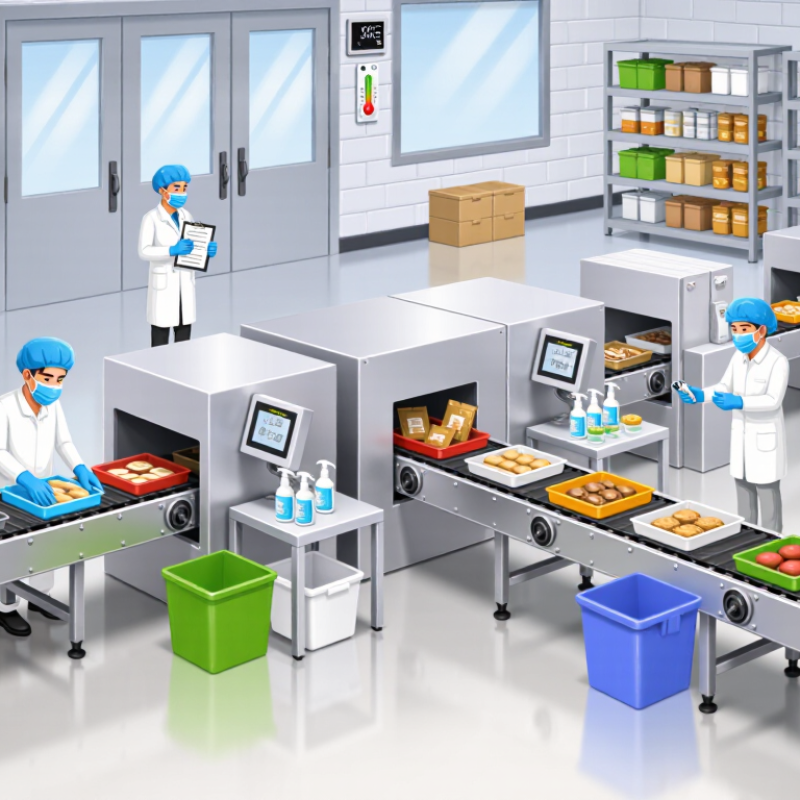
How to Prevent Contamination in Food Processing?

Understanding the Main Sources of Contamination in Food Processing

Contamination in food processing often begins with ordinary contact. Raw poultry, soil-covered vegetables, unsafe water, workers’ hands, and poorly cleaned equipment can carry pathogens into production areas. The World Health Organization estimates that contaminated food causes about 600 million illnesses and 420,000 deaths worldwide each year. These figures show why small failures matter. A wet conveyor joint, a cracked cutting board, or one unwashed glove can spread hazards across an entire batch.

Cross-contamination is another major source. Raw materials should move separately from cooked products, with dedicated tools, controlled traffic, and clear handwashing points.

The U.S. Centers for Disease Control and Prevention estimates that foodborne diseases cause about 48 million illnesses annually in the United States.

Cleaning chemicals, lubricants, allergens, and metal fragments also require control. Microbiological swabs and environmental monitoring can reveal hidden risks, although testing alone cannot prove that a process is safe. That assumption needs regular review.

Tips: Inspect drains, seals, and machine corners during every sanitation check. Record water temperature and chemical concentration. Train workers with real examples, such as changing gloves after touching a raw-material bin. Verify cleaning visually and through scheduled testing. Review near-misses, not only confirmed failures. No facility is perfect. Even experienced teams can overlook a damp surface behind a panel. Fresh eyes and honest reporting often prevent a larger incident.

Designing Hygienic Facilities, Equipment, and Production Zones

Food contamination prevention begins with facility design, not only cleaning schedules.
Hygienic facilities separate raw materials, processing, packaging, and finished products. Air should move from cleaner zones toward less-clean zones, not backward. Floors need durable, non-porous surfaces with gentle slopes toward accessible drains. Wall-to-floor joints should be sealed and easy to inspect.
Small details matter. Condensation above exposed food can undo careful sanitation within minutes. This is often missed during construction reviews.

Equipment should have smooth welds, rounded corners, and no hollow frames that trap moisture. Design conveyors, tanks, and valves for full access during cleaning and inspection. A tool that cannot be opened safely will not be cleaned consistently. Place handwashing stations near entries, separate from product-contact tasks. Use visible color zoning for utensils, boots, and protective clothing.
The system must be practical, or workers will create shortcuts. That uncomfortable truth deserves attention.

Production zones need controlled movement. Raw-material traffic should not cross finished-product routes. Doors, air curtains, and barriers can support this layout, but they cannot replace disciplined behavior. Keep maintenance tools outside high-care areas whenever possible. Record sanitation checks, environmental test results, corrective actions, and verification times. Review trends, not just pass-or-fail results.
A clean sample does not prove a perfect process. After equipment changes, recheck drains, corners, seals, and hard-to-reach guards.

Controlling Personnel Hygiene, Food Handling, and Process Practices

Food contamination often begins with ordinary actions: a missed handwash, a dirty knife, or an uncovered ingredient. The CDC estimates that contaminated food causes about 48 million illnesses, 128,000 hospitalizations, and 3,000 deaths annually in the United States. Personnel hygiene must therefore be treated as a control measure, not a routine formality. Workers should wash hands for at least 20 seconds before entering production areas, after breaks, and after handling waste. Gloves are not magic. They must be changed when torn, soiled, or used for another task.

Food handling also requires clear separation. Raw meat, ready-to-eat foods, and packaging materials should have dedicated zones, tools, and storage positions. A clean knife placed beside a raw-food container can create immediate risk.

The World Health Organization reports that unsafe food causes about 600 million illnesses and 420,000 deaths worldwide each year.

These figures show why temperature control matters. Use calibrated thermometers, record cooling times, and keep chilled foods within the facility’s approved limits. Visual checks alone are unreliable.

Process practices need disciplined verification.

Sanitation schedules should identify the surface, chemical, concentration, contact time, and responsible worker. Records must reflect real conditions, not perfect assumptions. A checklist can create false confidence when employees sign it without checking equipment corners or conveyor joints. Managers should observe tasks, review deviations, and invite workers to report practical obstacles. Small misses matter. Continuous training helps, but habits improve only when supervisors consistently model the required behavior.

Applying Effective Cleaning, Sanitation, and Pest Control Measures

How to Prevent Contamination in Food Processing?

Effective sanitation begins with removing soil, not merely spraying disinfectant. The World Health Organization estimates that 600 million people suffer foodborne illnesses annually, with 420,000 deaths. These figures show why cleaning procedures need measurable controls.

Operators should disassemble equipment, remove food residues, wash with verified detergent concentrations, rinse, and apply an approved sanitizer. Water temperature and contact time must be recorded.

Small details matter. A practical plant inspection may find residue beneath conveyor frames or moisture around floor drains. These areas require direct attention.

The FDA Food Code emphasizes cleaning and sanitizing food-contact surfaces at suitable frequencies and whenever contamination may occur.

ATP testing can provide rapid feedback, but it is not a complete microbiological assessment. Results still need interpretation.

Pest control must support sanitation, not replace it. The United Nations Food and Agriculture Organization reports that pests contribute substantially to global food losses, making exclusion essential.

Keep doors closed, repair wall gaps, trim vegetation, and maintain dry waste areas. Place monitored traps away from exposed ingredients, then review trends instead of checking them casually.

No sanitation plan is perfect. Staff may rush after production peaks, and checklists can become routine paperwork.

Supervisors should observe actual practices, question unusual results, and document corrective actions before restarting affected equipment.

Monitoring Food Safety Risks and Improving Preventive Systems

How to Prevent Contamination in Food Processing?

Monitoring Food Safety Risks and Improving Preventive Systems

Effective contamination control begins with continuous risk monitoring, not occasional inspections. Food safety teams should map each processing step and identify biological, chemical, and physical hazards. Pay close attention to high-touch surfaces, water points, air movement, and temperature changes. Record findings immediately, including small deviations that seem harmless. Trends often reveal problems before testing confirms them.

A reliable preventive system uses clear limits, assigned responsibilities, and verified corrective actions. For example, staff should check cooling temperatures with calibrated instruments and review sanitation records every shift. Environmental swabs can identify hidden contamination near drains, conveyors, and equipment joints. No system is perfect. It is easy to trust a clean-looking surface too quickly. Regular audits, retraining, and independent verification help challenge that assumption.

Tips: Keep monitoring forms simple and specific. Define who checks each control point and when. Store samples correctly, and investigate unusual results instead of deleting them. Review recurring failures during team meetings. Replace worn seals promptly. Small gaps matter. Encourage workers to report problems without fear, because silent mistakes can grow into serious risks.

How to Prevent Contamination in Food Processing? - Monitoring Food Safety Risks and Improving Preventive Systems

Food safety risk-monitoring matrix based on preventive controls, HACCP principles, and commonly used FDA Food Code reference limits. Requirements may vary by product, process, and jurisdiction.

Risk Category Contamination Risk Key Preventive Control Monitoring Measure and Reference Criterion Suggested Monitoring Frequency Corrective Action Verification Record
Biological High
Growth of pathogens during cooking or reheating
Validated thermal process with calibrated thermometers and controlled cooking time FDA Food Code reference temperatures:
• Poultry and stuffed foods: 74°C / 165°F instantaneous
• Ground meats: 68°C / 155°F for 17 seconds
• Whole cuts of meat: 63°C / 145°F for 15 seconds
Every batch or production lot; continuous data logging where available Hold affected product, investigate the deviation, reprocess only when validated, or dispose of product. Check equipment calibration. Cooking logs, batch records, thermometer calibration records, deviation reports
Biological High
Pathogen growth during cooling
Rapid cooling using shallow containers, blast chilling, portioning, or equivalent validated methods FDA Food Code reference cooling schedule:
• From 57°C / 135°F to 21°C / 70°F within 2 hours
• From 21°C / 70°F to 5°C / 41°F within an additional 4 hours
Each batch during the cooling process Separate and evaluate the batch, use approved rapid-cooling methods, extend cooling only when safe and validated, or discard. Time-temperature charts, cooling logs, corrective-action records
Biological High
Pathogen multiplication during storage
Temperature-controlled storage and stock rotation FDA Food Code reference:
• Cold holding: 5°C / 41°F or below
• Hot holding: 57°C / 135°F or above
Use product-specific limits when stricter requirements apply.
At start-up, at defined intervals, and at every shift change; continuous alarms recommended Quarantine exposed product, restore the unit, assess time-temperature exposure, and document disposition. Refrigerator and hot-holding logs, automated temperature records, alarm tests
Biological High
Cross-contamination from raw materials to ready-to-eat food
Physical separation, dedicated utensils, hygienic zoning, and controlled personnel flow Verified separation of raw and ready-to-eat areas; no direct contact between raw-food tools and finished products Per shift, after changeovers, and during hygiene inspections Stop the affected operation, isolate potentially contaminated product, clean and sanitize, and retrain personnel if required. Zoning checklists, line-clearance records, hygiene inspection reports
Biological High
Contamination from food-contact surfaces
Validated cleaning and sanitizing program using appropriate concentration, temperature, contact time, and coverage Sanitizer concentration and conditions must comply with the product label, approved process, and local regulations. No visible soil after cleaning. Before production, after cleaning, and during high-risk production periods Stop production, reclean and resanitize, retest the concentration, and assess product made since the last acceptable check. Pre-operational inspection, sanitizer test results, cleaning records, ATP or microbiological verification results
Environmental High
Environmental contamination by Listeria species in wet processing areas
Environmental monitoring program, hygienic zoning, drainage control, and moisture management Sampling locations and action limits must be risk-based and site-specific. Any positive result in a food-contact zone requires documented investigation. Risk-based schedule; increase frequency after construction, maintenance, or a positive result Place affected product on hold, intensify cleaning, conduct vector swabbing, perform root-cause analysis, and verify effectiveness. Environmental sampling map, laboratory reports, trend analysis, corrective-action records
Allergen High
Undeclared allergen caused by cross-contact or incorrect labeling
Allergen segregation, validated cleaning, controlled rework, label approval, and line clearance Correct product identity, ingredient declaration, allergen statement, packaging, and changeover verification must match the approved specification. At receiving, before start-up, at every product changeover, and during label changes Stop the line, quarantine affected product and packaging, correct the label or dispose of product, and investigate the changeover failure. Label checklists, allergen-cleaning validation, line-clearance records, rework logs
Chemical Medium
Residues from cleaning chemicals, lubricants, or pesticides
Approved chemical control, accurate identification, locked storage, and documented dilution procedures Use only approved chemicals at label-specified concentrations. Food-grade lubricants are required where incidental food contact may occur. At receiving and dispensing; concentration checks during use; monthly storage audits Stop use of the chemical, isolate affected product, correct the dilution or storage issue, and evaluate potential exposure. Chemical inventory, safety data sheets, dilution records, supplier approvals, audit reports
Physical Medium
Metal, glass, plastic, or other foreign material
Preventive maintenance, brittle-plastic and glass control, sieving or filtration, and validated detection systems Metal detector or X-ray performance limits must be validated for the product, package, line speed, and intended hazard. Test pieces must be detectable and rejected. Start-up, after product or format changes, at defined intervals, and at end of run Stop the line, isolate product since the last satisfactory test, retest the system, identify the source, and document product disposition. Foreign-material inspection records, detector challenge tests, maintenance reports
Biological High
Unsafe water, ice, or compressed air contacting food
Potable water management, backflow prevention, protected ice handling, and filtered compressed air Water and ice used in food processing must be suitable for their intended use and meet applicable drinking-water requirements. Compressed air contacting food must be appropriately filtered and maintained. Water checks according to risk and legal requirements; filter inspection per maintenance schedule Stop use, identify affected products, investigate the source, restore the system, and complete required testing before release. Water test reports, filter-change records, backflow inspection records, utility maps
Biological Medium
Contamination from employee illness or poor hygiene
Handwashing, protective clothing, illness reporting, visitor controls, and hygiene training Employees must follow documented handwashing and personal-hygiene procedures and report symptoms or diagnosed illnesses that may affect food safety. At entry, during routine observations, and after breaks or contamination events Remove or restrict affected personnel, clean contaminated areas, assess exposed product, and retrain when necessary. Training records, entry checks, hygiene audits, illness-reporting documentation
Biological Medium
Contamination or deterioration during receiving
Approved suppliers, incoming inspection, temperature checks, packaging integrity checks, and lot traceability Verify supplier specifications, product temperature, seal integrity, date coding, transport conditions, and absence of visible contamination. Every delivery and every lot Reject or place the shipment on hold, notify the supplier, document the nonconformance, and review supplier performance. Receiving inspection forms, certificates of analysis, lot records, supplier corrective actions

Reference note: Temperature criteria shown above are commonly cited FDA Food Code reference values for retail and food-service operations. Food processors should apply validated process controls and the legal requirements of the applicable jurisdiction, product category, and intended market.

FAQS

What is the correct order for cleaning food-processing equipment?

Disassemble the equipment and remove visible food residue. Wash with verified detergent strength, rinse, then apply an approved sanitizer. Record water temperature and contact time.

Why is spraying sanitizer alone not enough?

Sanitizer cannot reliably work through grease, protein, or dried food. Soil must be removed first. Otherwise, the surface may look clean but remain risky.

Which hidden areas require special inspection?

Inspect beneath conveyor frames, around floor drains, inside equipment joints, and near worn seals. Moisture can collect there. Small gaps matter.

How often should food-contact surfaces be cleaned and sanitized?

Clean them at suitable scheduled intervals and whenever contamination may occur. Increase attention after spills, maintenance, unusual production delays, or contact with dirty materials.

Can rapid surface testing prove that an area is microbiologically safe?

No. Rapid testing can provide useful feedback, but it is not a complete microbiological assessment. Results need interpretation and follow-up when readings seem unusual.

What pest-control actions support effective sanitation?

Keep doors closed, repair wall gaps, trim nearby vegetation, and keep waste areas dry. Place monitored traps away from exposed ingredients. Review activity trends, not isolated checks.

How should a facility monitor contamination risks during production?

Map each processing step and identify biological, chemical, and physical hazards. Check high-touch surfaces, water points, air movement, and temperature changes. Record small deviations immediately.

What makes a preventive food-safety system reliable?

Set clear limits, assign responsibilities, and verify corrective actions. Use calibrated instruments for cooling temperatures. Review sanitation records every shift. Simple forms help, though forms alone are not enough.

What should supervisors do when results or practices seem unusual?

Observe actual work instead of trusting paperwork. Investigate unusual results, question rushed procedures, and document corrections before restarting affected equipment. A clean-looking surface can mislead anyone.

Conclusion

Preventing contamination in food processing requires a complete, preventive approach that addresses risks from raw materials, water, air, equipment, people, and the surrounding environment. The first step is to identify where physical, chemical, and biological hazards may enter the production process. Facilities should be designed with hygienic layouts, suitable surfaces, controlled production zones, and equipment that is easy to inspect and maintain. Clear separation between raw and finished products can also reduce the risk of cross-contamination.

To understand how to prevent contamination in food processing, organizations must establish strong personnel hygiene rules, safe food-handling procedures, and consistent process controls. Regular cleaning and sanitation should follow documented schedules, while pest control and waste management must be carefully monitored. Ongoing inspections, environmental testing, recordkeeping, staff training, and corrective actions help verify that preventive measures remain effective. By reviewing results and improving procedures over time, food processors can protect product quality and support a safer, more reliable production system.

Henry

Henry

Henry is a dedicated marketing professional with a profound expertise in the company's offerings. With years of experience in the industry, he possesses an impressive understanding of the market dynamics and consumer behaviors that drive success. Henry is committed to sharing his insights through......