In today's competitive landscape, global buyers demand efficient food production. The question arises: how to improve food production efficiency? This challenge is essential for sustainability and meeting rising consumer needs.
Innovative practices and technology play a crucial role in transformation. Techniques like precision farming and resource management can significantly enhance yield. However, the implementation is not without obstacles. Many producers struggle with the cost of technology and training.
Efforts must focus on education and partnership. Local farmers need guidance to adopt new methods. Collaboration among stakeholders can streamline processes and share resources. Awareness of these challenges is essential for meaningful progress in food production efficiency.
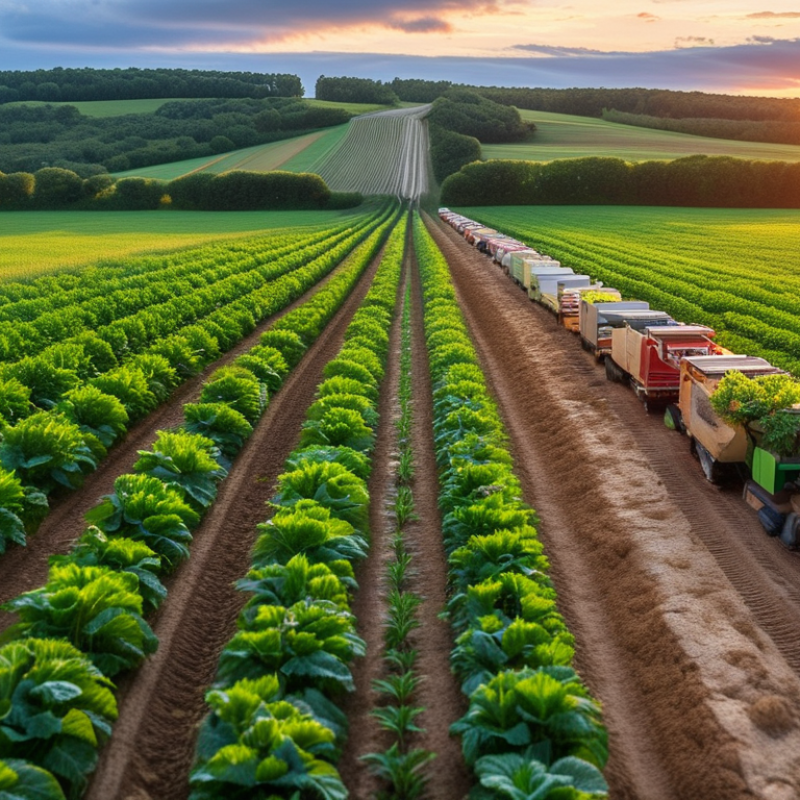
To enhance agricultural practices and boost productivity, global buyers need to focus on practical strategies that can be implemented effectively. One key approach is adopting precision agriculture techniques. This involves using technology to monitor crop health and soil conditions. By analyzing data from drones and sensors, farmers can make informed decisions. This not only maximizes yields but also minimizes waste through targeted interventions.
Another important strategy is investing in sustainable farming practices. Techniques such as crop rotation and reduced tillage help preserve soil quality. Additionally, integrating agroecological principles can lead to more resilient farming systems. These methods increase biodiversity and improve the ecosystem while ensuring that farmers remain productive.
Finding reliable sources of high-quality seeds is crucial. Buyers should learn about local varieties that are well-adapted to specific climates. Engaging with local farmers can provide insights into cultivation challenges. Regular training programs can also enhance skills among farmers. It is essential to create a platform where farmers share their experiences and best practices. Fostering collaboration and community engagement will ultimately lead to better agricultural outcomes.
In today's rapidly evolving food industry, technology plays a crucial role in enhancing production efficiency. According to the Food and Agriculture Organization, global food production must increase by 70% by 2050 to meet the needs of the growing population. This highlights the urgency for innovative approaches to optimize processes.
Precision agriculture technologies, such as drones and IoT sensors, have transformed traditional farming. These tools help collect data on crop health, soil conditions, and weather patterns. A report from the McKinsey Global Institute indicates that digital tools could enhance productivity in agriculture by up to 20%. However, many small-scale farmers face challenges in accessing this technology, leading to disparities in production efficiency.
Moreover, implementing advanced data analytics can streamline supply chain management. With real-time insights, producers can make informed decisions about planting, harvesting, and distribution. Nonetheless, bridging the technology gap remains a significant hurdle. Many regions lack the infrastructure or training to adopt these innovations effectively. Investing in education and accessible technology is essential for realizing the full potential of food production efficiency.
Sustainable practices are vital for improving food production efficiency. According to a report by the Food and Agriculture Organization (FAO), about one-third of all food produced globally is wasted. This highlights a critical need for change, particularly in sourcing and processing methods.
Implementing precision agriculture can significantly reduce waste. Techniques such as soil health monitoring and data-driven irrigation improve yield while conserving resources. Research indicates that adopting these methods can boost efficiency by up to 30%. However, many producers lack access to the necessary technology and training, which results in underperformance.
Additionally, sustainable farming often means embracing crop diversity. Monoculture practices are prevalent but can lead to soil depletion. Diversifying crops can enhance resilience against pests and climate challenges. The World Wildlife Fund (WWF) reports that integrated farming systems yield up to 20% more than conventional methods. Despite these benefits, resistance to changing established practices persists within the industry. This resistance jeopardizes long-term sustainability and efficiency in food production.
Effective supply chain management is crucial for enhancing food distribution on a global scale. A well-organized supply chain reduces waste and lowers costs. It ensures that food moves efficiently from producers to consumers. However, challenges persist. Disruptions can occur due to natural disasters or geopolitical tensions. These events can lead to spoilage and delays.
Transparency is key in supply chains. Every participant must have real-time access to information. This may involve implementing technology like blockchain to track the movement of food products. Good Communication fosters collaboration. When producers, suppliers, and distributors work together, they can resolve issues more quickly.
Moreover, addressing inefficiencies is essential. Regular reviews of the supply chain processes can identify bottlenecks. Updating logistics strategies often requires reflection and adaptation. Areas for improvement might include transportation logistics or storage facilities. Adapting to changing market demands is vital. A strong supply chain can lead to better food security worldwide, despite existing challenges.
| Dimension | Description | Current Value | Target Value | Improvement Strategy |
|---|---|---|---|---|
| Production Yield | Percentage of crop produced versus crop planted | 75% | 85% | Implement precision farming techniques |
| Transportation Efficiency | Average time taken to transport food products | 48 hours | 24 hours | Optimize route planning and logistics |
| Inventory Turnover | Rate at which inventory is sold and replaced | 4 times/year | 8 times/year | Enhance demand forecasting and order management |
| Waste Reduction | Percentage of food lost during production and distribution | 10% | 5% | Implement better storage solutions and monitoring technologies |
| Supplier Reliability | Percentage of timely deliveries from suppliers | 85% | 95% | Establish strong relationships and agreements with suppliers |
Research and development (R&D) play a critical role in improving food production efficiency. A recent report from the Food and Agriculture Organization (FAO) indicates that global agricultural productivity needs to increase by about 60% to meet future food demands. This can be addressed through innovative techniques like precision agriculture. This method uses technology to optimize resources, reducing waste and increasing yield.
Moreover, investing in sustainable methods is vital. According to the World Bank, sustainable agricultural practices can enhance productivity by as much as 30% over time. These practices not only improve food quality but also minimize environmental impact. However, challenges remain. Many farmers may lack access to new technologies or training, leading to disparities in production efficiency.
Collaborative efforts in R&D can help bridge these gaps. Universities, governments, and industry leaders should unite to develop solutions tailored to local needs. Continuous feedback loops are essential for refining techniques based on real-world conditions. A focus on community-driven research can ensure that innovations are not only effective but also accessible to all farmers.
: Precision agriculture uses technology to monitor crop health and soil conditions. It helps farmers make informed decisions.
Sustainable farming preserves soil quality and boosts biodiversity. It creates resilient farming systems that ensure productivity.
Farmers should engage with local sources. Learning about regional varieties can enhance adaptation to specific climates.
Supply chains can be disrupted by disasters or geopolitical issues, leading to spoilage and delays in distribution.
Implementing technologies like blockchain ensures real-time information access. This fosters better collaboration among participants.
R&D boosts food production efficiency significantly. It addresses future food demand through innovative agricultural techniques.
Regular reviews identify bottlenecks and inefficiencies. This leads to improved logistics and transportation strategies.
Regular training programs are essential. They help farmers enhance skills and share best practices within the community.
They ensure that innovations are effective and accessible. Collaboration among universities and farmers leads to tailored solutions.
Many farmers may struggle with access or lack training. This creates disparities in production efficiency and should be addressed.
To address the pressing need of how to improve food production efficiency for global buyers, several strategies can be implemented. Firstly, enhancing agricultural practices through modern techniques can significantly increase productivity. This includes the integration of advanced technologies that optimize food production processes, such as precision farming and data analytics. Furthermore, sustainable practices are essential for ensuring long-term efficiency; they not only conserve resources but also contribute to environmental health.
In addition, strengthening supply chain management is critical for effective global food distribution. By streamlining processes and reducing waste, suppliers can meet the demands of a growing population more effectively. Lastly, promoting research and development in food production techniques will foster innovation and lead to the discovery of new ways to improve efficiency. Collectively, these approaches position stakeholders to meet the challenges of global food production, ensuring a stable and sustainable future.

Chef Nest Kitchen