Commercial kitchens are changing faster than many operators expected. Labor shortages, rising energy costs, tighter margins, and customer demand for transparency are reshaping daily decisions. The question is not simply what trends are shaping commercial kitchens, but which trends can improve performance without weakening hospitality.
Ferran Adrià, the influential chef and innovation leader, once said, “Creativity means not copying.” His idea applies strongly to modern foodservice design. Operators are exploring automated cooking systems, smart refrigeration, induction equipment, and digital inventory tools. These technologies can reduce waste and improve consistency. They can also create new problems when staff lack proper training.
Efficiency matters.
Energy-saving ventilation, heat recovery, LED lighting, and water-conscious cleaning systems are becoming practical priorities. Modular layouts are gaining attention because menus and service models change quickly. A prep station may need to support delivery orders at noon and high-volume dining at night. Flexible equipment helps, but it does not solve every operational weakness.
Human judgment remains essential. Experienced chefs still notice texture, timing, temperature, and team fatigue. Data can reveal that waste increased, but people must investigate why. That distinction is easy to overlook.
The strongest kitchens will combine technology with thoughtful workflow, safer workspaces, and responsible sourcing. Yet not every “smart” appliance delivers a meaningful return. Some systems add complexity, maintenance costs, or false confidence. A careful operator should test tools in real service before making large investments.
The future may be efficient, connected, and more sustainable. It should also remain practical, adaptable, and unmistakably human.
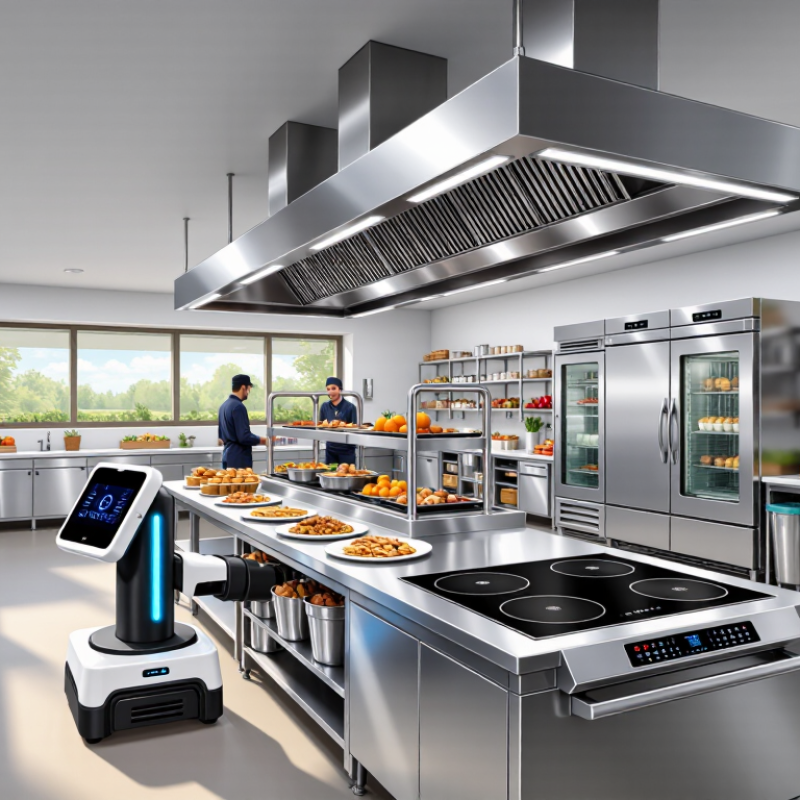
Commercial kitchens are being reshaped by labor pressure, tighter energy goals, and faster service expectations. These forces are connected. A staffing gap can influence equipment choices, menu design, and cleaning routines. Automation now handles repetitive work, such as portioning, temperature monitoring, and inventory tracking. It does not replace trained judgment. A supervisor still needs to notice a blocked drain, uneven heating, or unsafe workflow.
In my experience, the most useful technology is not always the most impressive. Simple alerts can prevent spoiled ingredients and expensive downtime. Yet digital systems may create new problems when workers receive too many notifications. Energy efficiency is becoming an operational decision, not just an environmental ambition. Induction cooking, heat recovery, efficient refrigeration, and improved ventilation can reduce daily consumption. However, installation costs and building limitations may slow adoption. A kitchen manager should examine real usage data before choosing equipment. Assumptions can be costly.
Hygiene and traceability are also changing kitchen routines. More teams record delivery temperatures, allergen controls, and cleaning checks electronically. This improves accountability when records are accurate and reviewed. A rushed checklist proves little. Staff training remains essential, especially during busy service. Connected equipment can support faster decisions, but it cannot fix poor layout or unclear responsibility. The industry is moving toward flexible kitchens, though practical design still matters more than novelty. That lesson is easy to overlook.
| Trend | Relevant Data Point | Main Operational Driver | Effect on Commercial Kitchens | Priority Level |
|---|---|---|---|---|
| Energy-efficient equipment | Commercial food service facilities can use approximately 2.5 times more energy per square foot than other commercial buildings. | High heat loads, refrigeration, ventilation, and long operating hours. | Greater demand for high-efficiency cooking equipment, heat recovery, smart controls, and upgraded ventilation systems. | Very High |
| Kitchen electrification | Electric induction cooking transfers roughly 80%–90% of its energy to cookware, compared with substantially lower heat-transfer efficiency for conventional gas cooking. | Decarbonization targets, indoor air quality, and improved temperature control. | More induction ranges, electric ovens, efficient heat pumps, and higher-capacity electrical infrastructure. | Very High |
| Digital kitchen management | Connected systems can continuously record temperatures, equipment status, production levels, and cleaning tasks instead of relying only on manual logs. | Need for traceability, faster decisions, and consistent operating procedures. | Expansion of cloud-based dashboards, digital checklists, alerts, inventory tools, and predictive maintenance. | High |
| Automation and robotics | Automation is most practical for repetitive, high-volume tasks such as dispensing, frying, mixing, portioning, and dishwashing. | Labor shortages, repetitive-work reduction, and demand for consistent portions. | Growth in semi-automated workstations that support employees rather than fully replacing culinary labor. | High |
| Labor productivity and ergonomic design | Reducing walking distance, unnecessary lifting, and repeated motions can increase productive time and lower physical strain. | Persistent recruitment challenges and the need to retain trained employees. | More compact work cells, adjustable equipment, improved storage access, and clearer station layouts. | Very High |
| Food-waste measurement and prevention | Pre-consumer food waste in food service commonly includes overproduction, spoilage, trimming losses, and preparation errors; measurement is the first step toward reduction. | Rising food costs, waste-disposal expenses, and sustainability requirements. | More demand for waste scales, production forecasting, inventory rotation, smaller batches, and donation or composting programs. | Very High |
| Food safety digitization | Time and temperature control remains central to preventing bacterial growth in potentially hazardous foods. | Regulatory compliance, audit readiness, and prevention of temperature-related food-safety incidents. | Wider use of automated temperature sensors, digital logs, corrective-action alerts, and electronic traceability. | Very High |
| Delivery and omnichannel production | A single kitchen may now support dine-in, takeaway, delivery, catering, and online orders at the same time. | Consumer demand for convenience, speed, and multiple ordering channels. | More dedicated packing areas, order-dispatch screens, holding equipment, and menu designs optimized for transport. | High |
| Modular and flexible kitchen layouts | Flexible equipment and movable workstations allow production capacity to be adjusted without rebuilding the entire kitchen. | Changing menus, variable demand, smaller footprints, and faster site deployment. | Greater use of modular counters, mobile storage, interchangeable equipment, and adaptable utility connections. | High |
| Water efficiency and wastewater control | Dishwashing, food preparation, sanitation, and ice production make water a significant utility input in commercial kitchens. | Higher utility costs, water-stress concerns, and environmental compliance. | More efficient spray valves, low-water dishwashers, leak monitoring, filtration, and grease-management systems. | High |
Data note: The indicators summarize widely documented commercial food-service operating conditions and common industry benchmarks. Actual results vary by kitchen size, menu, location, operating hours, equipment, and utility rates.
Labor shortages, energy goals, quality demands, and faster service are reshaping daily operations. These pressures often affect equipment, menus, and cleaning routines together.
Automation can portion food, monitor temperatures, and track inventory. It cannot reliably notice a blocked drain, uneven heating, or an unsafe workflow.
Clear preparation lists, visual instructions, and cross-training help workers cover different stations. Training should continue beyond the first week. Gaps remain.
Managers should study real usage data, installation limits, energy consumption, and maintenance needs. Impressive technology may not solve a practical kitchen problem.
Induction cooking, efficient refrigeration, heat recovery, and improved ventilation can lower daily consumption. Building limitations and installation costs may delay these changes.
Electronic records can track delivery temperatures, allergen controls, cleaning checks, and equipment performance. They help accountability only when staff review accurate information.
No. Alerts can identify unusual temperatures, but workers must inspect food, storage conditions, and timing. A chilled sauce may lose texture after several busy hours.
Flexible kitchens may use modular stations, adaptable layouts, and equipment for repetitive tasks. Practical cleaning, safe movement, and clear responsibility still matter more than novelty.
Commercial kitchens are being transformed by rapid advances in technology, changing customer expectations, and growing demands for efficiency and sustainability. To understand what trends are shaping commercial kitchens, it is important to examine the increasing use of automation, robotics, connected appliances, and smart monitoring systems. These tools can support consistent food preparation, improve inventory control, reduce errors, and help staff make faster operational decisions.
At the same time, kitchens are adopting energy-efficient equipment, responsible water use, waste-reduction programs, and more sustainable purchasing practices. Flexible layouts and modular workstations are becoming essential because they allow businesses to adapt to changing menus, service models, and production volumes. Stronger safety standards, streamlined workflows, and improved sanitation also contribute to reliable daily operations. Although technology is advancing, skilled employees remain vital for food quality, creativity, and customer satisfaction. Future commercial kitchens will likely combine human expertise with intelligent systems to create safer, more adaptable, efficient, and environmentally responsible working environments.

 Chef Nest Kitchen