Why Is Hygiene Critical in Food Manufacturing in 2026?

Time:2026-10-07 Author:Liam
0%

Why hygiene is critical in food manufacturing becomes clearer on the factory floor. A wet conveyor joint, a poorly cleaned valve, or an uncovered ingredient can create risks that consumers never see. In 2026, manufacturers face tighter supply networks, faster production schedules, climate-related contamination pressures, and rising demands for transparent sourcing. Hygiene is no longer only a cleaning department’s responsibility. It protects product quality, worker confidence, brand reputation, and public health.

Frank Yiannas, former Deputy Commissioner for Food Policy and Response at the U.S. Food and Drug Administration, has often described food safety as “a team sport.” That idea remains practical. Operators, engineers, sanitation teams, laboratory staff, and senior managers must act together. A documented cleaning schedule is useful, but it cannot replace careful observation. Is the drain flowing correctly? Are gloves changed after handling waste? Did the environmental swab reveal a pattern? Small details matter.

The strongest hygiene programs combine validated procedures, employee training, preventive maintenance, and honest reporting. They also use data to identify recurring problems before contamination spreads. Still, no system is perfect. A rushed changeover may expose a weak point. A familiar process may hide an old assumption. That is why why hygiene is critical in food manufacturing deserves more than a general statement about cleanliness. It requires continuous verification, practical discipline, and the willingness to question routines that appear successful. Clean surfaces help. Consistent thinking helps more.
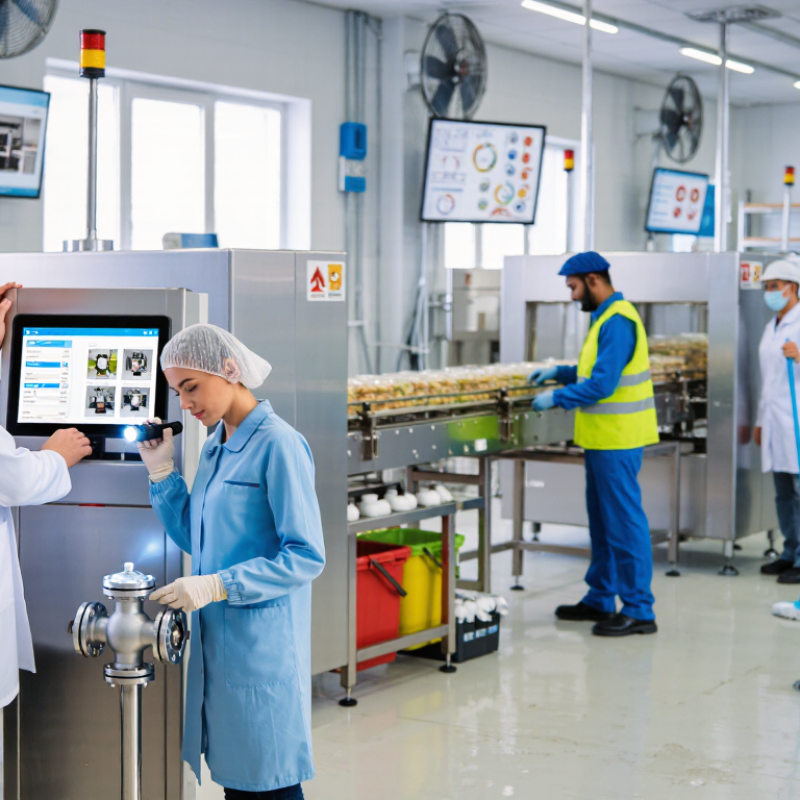
Why Is Hygiene Critical in Food Manufacturing in 2026?

The Meaning and Scope of Hygiene in Food Manufacturing

Why Is Hygiene Critical in Food Manufacturing in 2026?

The Meaning and Scope of Hygiene in Food Manufacturing

Hygiene in food manufacturing means controlling contamination from people, equipment, water, air, pests, and raw materials. It is much broader than washing surfaces after production. A hygienic system begins with facility design, including smooth floors, sealed joints, proper drainage, and accessible equipment. It also includes personal habits, protective clothing, handwashing, allergen control, and safe waste removal. Each detail matters.

In 2026, manufacturers increasingly use sensors, digital records, and rapid testing to identify risks earlier. However, technology cannot replace trained workers or careful judgment. A clean-looking conveyor may still hide residue beneath a guard. A missed handwashing step can affect an entire production run. Reliable hygiene depends on written procedures, verified cleaning results, environmental monitoring, and honest corrective actions. Records should show what happened, not what people hoped happened.

Tips

Train staff with real examples, such as a cracked seal or blocked drain. Inspect difficult-to-reach areas during every hygiene review. Use clear cleaning schedules, but question them when conditions change. Check water quality and chemical concentrations regularly. Never treat a passing inspection as permanent proof of control. Perfect hygiene is not a realistic promise. Continuous improvement is. One weakness remains common: teams may focus on visible dirt while overlooking moisture, airflow, or hidden product buildup. That deserves reflection.

How Hygiene Prevents Contamination and Foodborne Illness

Why Is Hygiene Critical in Food Manufacturing in 2026?

Food hygiene prevents contamination before it reaches consumers. The World Health Organization estimates that contaminated food causes 600 million illnesses and 420,000 deaths worldwide each year (WHO, 2022). In the United States, the CDC estimates 48 million foodborne illnesses annually, including 128,000 hospitalizations (CDC, 2011). These figures show why hygiene remains a production priority, not a cosmetic standard.

On a manufacturing floor, one unwashed hand can transfer pathogens to a ready-to-eat surface. Moist conveyor joints, damaged seals, and poorly cleaned drains can also support microbial growth. Effective programs combine handwashing, hygienic zoning, validated cleaning, environmental swabbing, and strict temperature control. ATP checks can provide rapid feedback, but they do not identify every pathogen. A clean-looking line may still hide risk.

Practical controls must survive busy shifts and rushed changeovers. Workers need clear procedures, suitable protective clothing, and training that reflects real tasks. Supervisors should review swab results, investigate repeated failures, and record corrective actions. No checklist is perfect. Human shortcuts still happen. That weakness deserves honest review, not blame. The FDA’s Food Code and Codex food hygiene principles both emphasize prevention, monitoring, and documented controls. Strong hygiene protects products, reduces recalls, and limits exposure to foodborne illness throughout the supply chain.

Effective hygiene in food manufacturing helps prevent contamination through proper handwashing, equipment sanitation, hygienic zoning, safe handling, and the control of cross-contamination. The chart shows estimated annual illnesses caused by major foodborne pathogens in the United States, using national estimates for domestically acquired infections.

Source: U.S. CDC estimates for domestically acquired foodborne illnesses, 2011. Values are rounded to the nearest thousand.

Key Hygiene Practices Across Food Production Processes

Why Is Hygiene Critical in Food Manufacturing in 2026?

Key Hygiene Practices Across Food Production Processes

Food hygiene protects consumers and production continuity. WHO’s Estimates of the Global Burden of Foodborne Diseases reports 600 million illnesses annually. It also links 420,000 deaths to contaminated food. In 2026, hygiene must cover every step, from receiving ingredients to final packing. Cleanability matters. Cracked seals, damp corners, and poorly designed drains can shelter microorganisms.

Sanitation begins with controlled cleaning schedules and verified chemical concentrations. Workers should wash hands before entering processing areas and after handling waste. Shortcuts happen. Practical training should explain why each step matters, not only what to do. Raw and ready-to-eat materials need physical separation. Dedicated tools reduce transfer risks. ATP swabs can indicate organic residue, but they do not prove pathogens are absent. This limitation deserves attention.

Water quality also requires routine testing. The WHO and UNICEF Joint Monitoring Programme reported that 2.2 billion people lacked safely managed drinking water in 2022. Food plants should use verified potable water for processing, cleaning, and ice production. Temperature controls must protect chilled and heated products during storage and transport. Digital records can reveal recurring failures, but only when staff review them honestly. Audits should examine real behavior, including rushed changeovers and missed handwashing. No facility is perfect. A strong hygiene culture notices weak points before an incident exposes them.

Why Is Hygiene Critical in Food Manufacturing in 2026? – Key Hygiene Practices Across Food Production Processes

A practical hygiene-control framework aligned with HACCP principles, Codex General Principles of Food Hygiene, and FDA current good manufacturing practice requirements.

Production Stage Main Hygiene Risks Key Hygiene Practices Typical Verification Activities Relevant Control Reference
Supplier Approval and Receiving Pathogens, allergens, chemical contamination, damaged packaging, and temperature abuse. Approve suppliers using risk-based criteria; inspect vehicle and packaging condition; verify lot identification, certificates, and storage temperatures; segregate rejected or suspect materials. Receiving records, temperature checks, packaging inspections, supplier performance reviews, and corrective-action documentation. HACCP prerequisite programs; Codex supplier-control principles; FDA 21 CFR Part 117 supply-chain requirements.
Raw Material Storage Cross-contamination, pest activity, moisture-related spoilage, allergen mix-ups, and microbial growth caused by inadequate temperature control. Use dedicated zones where necessary; maintain suitable time and temperature conditions; keep materials off the floor; apply stock rotation; separate allergens and incompatible chemicals. Temperature and humidity logs, pest inspections, inventory checks, allergen-storage audits, and sanitation inspections. FDA CGMP requirements for plant operations and sanitary storage; Codex hygiene practices.
Personnel Entry and Hand Hygiene Transfer of microorganisms from hands, clothing, footwear, illness, jewelry, or personal items. Provide handwashing facilities with water, soap, and hygienic drying; use protective clothing and hair restraints; restrict access for ill or injured personnel; prohibit eating, smoking, and jewelry in exposed-product areas. Routine observations, training records, handwashing-station checks, illness reporting, and internal hygiene audits. Codex personal hygiene principles; FDA 21 CFR 117.10 personnel requirements.
Preparation and Processing Cross-contamination between raw and ready-to-eat materials, allergen carryover, foreign material, and growth during time-temperature abuse. Separate raw and finished-product flows; control processing time and temperature; use hygienically designed equipment; control rework and allergens; protect exposed food from condensation and environmental contamination. Process monitoring, allergen changeover checks, equipment inspections, calibration, environmental observations, and batch-record review. HACCP hazard analysis and preventive controls; FDA CGMP production-process requirements.
Thermal Processing Survival of pathogens because of insufficient heat treatment, inaccurate instruments, or process deviations. Validate the scheduled process for the product; monitor critical time and temperature parameters; maintain calibrated instruments; prevent recontamination after heating. Continuous or scheduled temperature records, calibration checks, deviation reviews, product disposition, and validation records. HACCP critical-control-point principles; validated process controls; applicable national thermal-processing regulations.
Cooling and Cold Storage Rapid growth of surviving or introduced microorganisms when cooling is too slow or cold storage is inadequate. Use validated cooling procedures; avoid overloading cooling equipment; minimize exposure time; maintain cold-chain controls; protect food from raw-product contact and condensation. Time-temperature records, cooler alarms, product-core checks, corrective-action reviews, and stock-rotation checks. HACCP time-temperature control; applicable food-code and product-specific requirements.
Cleaning and Sanitation Biofilms, persistent pathogens, allergen residues, chemical residues, and contamination caused by ineffective cleaning. Use written SSOPs; remove soil before sanitizing; apply approved chemicals at the correct concentration and contact time; clean food-contact surfaces between product changes; prevent high-pressure spray from spreading contamination. Pre-operational inspections, sanitizer-concentration checks, ATP or other hygiene indicators, microbiological swabbing, and trend analysis. Sanitation preventive controls; FDA CGMP sanitation requirements; Codex cleaning and disinfection principles.
Environmental Monitoring Persistence or spread of environmental pathogens in drains, floors, equipment frames, and other areas near exposed ready-to-eat food. Create a risk-based sampling plan; classify sampling zones; sample after sanitation or during production as appropriate; investigate recurring findings and eliminate root causes. Indicator-organism or pathogen testing, mapping of results, trend reviews, intensified sampling, and documented corrective actions. Risk-based environmental monitoring under preventive-control systems; facility-specific hazard analysis.
Packaging and Labeling Post-process contamination, package damage, incorrect allergen declaration, and loss of seal integrity. Protect product during filling; verify packaging-material suitability; control seal parameters; perform label and allergen checks at start-up and changeover; segregate different products and labels. Seal inspections, label reconciliation, line-clearance checks, metal or foreign-material controls where applicable, and finished-product sampling. FDA labeling and CGMP requirements; HACCP packaging and foreign-material controls.
Finished-Product Release and Distribution Release of products affected by process deviations, damaged packaging, incorrect storage, or incomplete traceability. Release product only after required records are reviewed; maintain lot coding and traceability; control dispatch temperatures; use clean transport equipment; retain recall procedures. Batch-record approval, dispatch inspections, traceability exercises, mock recalls, complaint analysis, and distribution-temperature review. HACCP verification and recall principles; FDA preventive-control records and traceability expectations.
Note: Control limits and monitoring frequencies must be established through a product- and facility-specific hazard analysis, validated where necessary, and aligned with the requirements of the country or market in which the food is produced and sold.

The Role of Employees, Equipment, and Facility Design

Why Is Hygiene Critical in Food Manufacturing in 2026?

The Role of Employees, Equipment, and Facility Design

In 2026, food hygiene depends on people, machines, and the spaces around them. Employees remain the first control point. A worker who washes hands correctly can prevent contamination before production begins. Clear training should explain when gloves must change and why clean clothing matters. Supervisors need to observe real behavior, not only completed checklists. Small shortcuts happen.

Practical experience shows that equipment design strongly affects cleaning quality. Smooth surfaces, accessible joints, and proper drainage reduce hidden residue. Sensors can monitor temperatures, moisture, and cleaning cycles, but data still requires human review. A warning may reveal a failing seal or an incomplete wash. Maintenance teams should document findings and verify corrective actions. No procedure is flawless.

Facility design connects these controls. Separate pathways for raw materials, finished products, waste, and employees can reduce cross-contact risks. Floors should direct water toward suitable drains, without creating standing pools. Airflow also deserves attention, especially near exposed products. Poorly positioned doors can carry dust into clean areas. Even an impressive building can develop weak points when production changes. Regular inspections should challenge assumptions, test hard-to-reach areas, and invite workers to report problems without fear.

How Technology and Regulations Are Advancing Hygiene in 2026

Food hygiene in 2026 is no longer limited to stainless steel, gloves, and scheduled inspections. Regulations increasingly demand evidence that controls work continuously. The World Health Organization estimates that contaminated food causes 600 million illnesses and 420,000 deaths globally each year. That figure keeps hygiene central to manufacturing decisions.

Digital systems now connect temperature probes, water-quality sensors, cleaning records, and laboratory results. Automated alerts can flag a rising cold-room temperature before products become unsafe. Vision systems can detect residue around filling heads, drains, and conveyor joints. The WHO Global Strategy for Food Safety 2022–2030 encourages stronger surveillance, traceability, and data sharing. These priorities are shaping modern regulatory expectations.

Traceability matters more in 2026. Risk-based rules require manufacturers to locate affected batches quickly and prove corrective actions. Electronic records can create a clear audit trail within minutes. But technology is not a substitute for skilled workers. A sensor cannot scrub a hidden gasket. A dashboard can look precise while a tired night shift misses a small leak. This is where many systems remain imperfect. Manufacturers need validated cleaning procedures, independent checks, and regular staff training. The Codex General Principles of Food Hygiene still place HACCP, sanitation, and competent personnel at the center of food safety. Technology should strengthen those controls, not hide their weaknesses.

FAQS

What does hygiene mean in food manufacturing?

Hygiene means controlling contamination from workers, equipment, water, air, pests, and raw materials. A clean surface is not enough.

Why is hygiene important in 2026?

Poor hygiene can spread harmful microorganisms through an entire production run. Strong controls protect consumers and reduce recalls.

How should a hygienic facility be designed?

Use smooth floors, sealed joints, effective drainage, and equipment that workers can access easily. Hidden corners matter.

Which areas often receive too little attention?

Teams may notice visible dirt but miss moisture, poor airflow, cracked seals, and residue beneath guards. This weakness is common.

Can sensors and digital records replace trained workers?

No. Sensors and rapid tests can identify risks earlier, but people still need judgment and practical training. Technology can miss context.

What personal practices reduce contamination?

Workers should wash their hands properly, wear suitable protective clothing, and follow hygiene rules during every shift. One missed step can matter.

How can manufacturers check whether cleaning worked?

Use visual checks, environmental swabbing, rapid surface tests, and verified cleaning records. No single test finds every risk.

What should hygiene records contain?

Records should show cleaning times, test results, failures, investigations, and corrective actions. They must describe reality, not hope.

How should teams respond to repeated hygiene failures?

They should investigate causes, review procedures, retrain workers, and change controls when conditions shift. Blame alone solves little.

Is perfect hygiene possible?

Perfect hygiene is not a realistic promise. Continuous improvement is more useful. Keep questioning the process.

Conclusion

Hygiene is the foundation of safe and reliable food manufacturing. It involves more than cleaning surfaces; it includes personal hygiene, sanitation procedures, hygienic facility design, safe water and air management, proper waste handling, and controls that prevent contamination throughout production. Understanding why hygiene is critical in food manufacturing helps businesses reduce the risk of harmful microorganisms, allergens, foreign materials, and cross-contamination that can lead to foodborne illness and product losses.

Effective hygiene depends on coordinated practices across receiving, processing, storage, packaging, and distribution. Employees must follow clear procedures and receive regular training, while equipment should be designed for easy cleaning, inspection, and maintenance. Facility layouts should separate clean and unclean areas and support efficient movement control. In 2026, improved monitoring technologies, data-based verification, automation, and stronger regulatory expectations are making hygiene programs more proactive, measurable, and responsive. Together, these measures protect consumers, strengthen operational consistency, and support trust in the food supply.

Liam

Liam

Liam is a dedicated marketing professional with a profound expertise in the industry, where he excels at highlighting the unique advantages of our core products. With a keen understanding of market trends and consumer needs, Liam frequently updates our company’s professional blog, providing......